
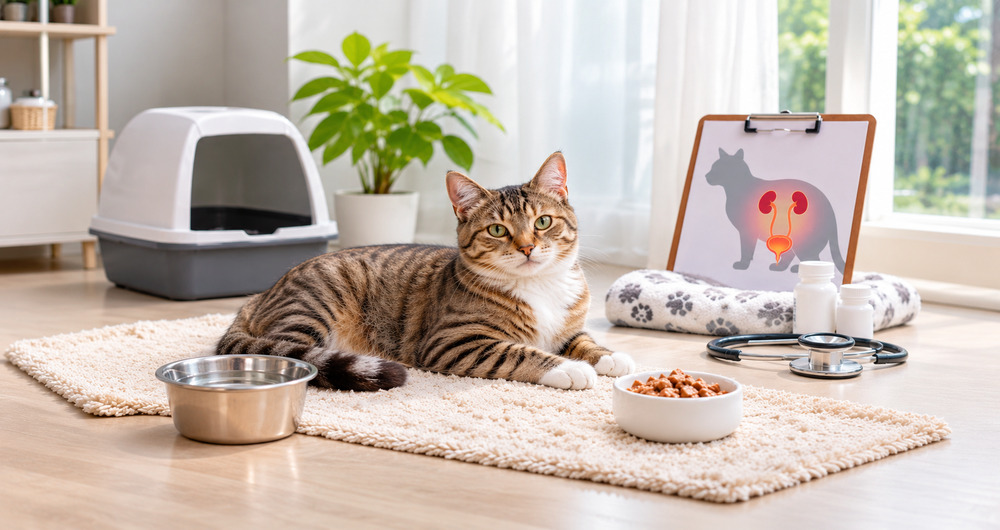
Have you noticed your cat visiting the litter box frequently, struggling to urinate or behaving unusually? These could be early signs of urinary problems. Urinary crystals in cats can sometimes lead to painful bladder stones or urinary blockages. Recognising the warning signs and seeking timely veterinary care can help protect your cat’s urinary health.
What Are Urinary Crystals in Cats?
Urinary crystals are tiny mineral formations that develop in a cat’s urine. While some may be harmless, others can irritate the bladder, form stones or cause urinary blockages.
The two most common types are:
- Struvite crystals: Formed from magnesium, ammonium and phosphate. They are commonly associated with alkaline urine.
- Calcium oxalate crystals: Form when calcium and oxalate combine. Unlike struvite stones, these cannot be dissolved through prescription diets.
Not every cat with crystals develops bladder stones, and crystals found in a urine sample do not automatically indicate a serious illness. A veterinary examination is important to understand their significance.
What Causes Crystals in Cat Urine?
Wondering what causes crystals in cat urine? Several factors can contribute to their development.
1. Insufficient Water Intake: Cats that drink very little water may produce concentrated urine, increasing the likelihood of mineral crystal formation.
2. Dietary Factors: Certain mineral levels and dietary compositions can influence urine concentration and pH, potentially encouraging crystal development.
3. Urinary pH Imbalance: Urine that is too alkaline or too acidic can create favourable conditions for different types of crystals.
4. Limited Physical Activity: Indoor cats with sedentary lifestyles may have reduced opportunities to move around and maintain healthy routines.
5. Underlying Health Conditions: Certain metabolic disorders and urinary tract conditions can increase the risk of crystal and stone formation.
Understanding these contributing factors helps veterinarians recommend appropriate treatment and preventive care.
Signs of Urinary Crystals in Cats: What to Watch For
Cats are naturally good at hiding discomfort, making early detection particularly important. Look out for these common signs: Frequent trips to the litter box, Straining or difficulty while urinating, Blood in the urine, Crying or showing discomfort during urination, Urinating outside the litter box, Excessive licking around the genital area, Passing only small amounts of urine.
Important: If your cat repeatedly tries to urinate but produces little or no urine, seek emergency veterinary attention immediately. A blocked urinary tract, particularly in male cats, is a life-threatening emergency. Do not wait for symptoms to improve on their own.
How to Treat Urine Crystals in Cats
Treatment depends on the type of crystals, their severity and whether bladder stones or urinary obstruction are present.
1. Veterinary Diagnosis
A veterinarian may recommend a physical examination, urine analysis and microscopic testing. X-rays or ultrasound may also be used to detect bladder stones and assess the urinary tract.
2. Prescription Urinary Diet
Special veterinary diets can help manage certain crystals. Struvite stones can often be dissolved with a prescribed diet, while calcium oxalate stones require other treatments as they cannot be dissolved through diet.
3. Increase Water Consumption
Encourage your cat to drink more water by providing multiple clean water bowls, using a pet water fountain or introducing vet-approved wet food into its diet.
4. Medication and Medical Procedures
Veterinarians may prescribe medication to manage pain and underlying issues. If stones cannot be dissolved or a blockage occurs, catheterisation or surgery may be required. Never give human medication without veterinary advice.
How Can You Prevent Urinary Crystals in Cats?
Prevent urinary crystals by providing fresh water, a vet-recommended diet, regular activity and clean litter boxes. Routine veterinary check-ups and periodic urine tests can help detect problems early.
Give Your Cat the Right Urinary Care at Seven Oaks Pet Hospital
Urinary crystals can cause discomfort, bladder irritation and serious complications if left untreated. Seven Oaks Pet Hospital offers advanced care for urinary crystals in cats in Hyderabad, helping pet parents address their cats’ urinary health concerns.
From identifying different types of urinary crystals to evaluating bladder stones and recommending suitable treatment, timely veterinary attention is essential for your cat’s recovery and long-term health.
Disclaimer:
This article is intended for educational purposes only and should not replace professional veterinary advice. If your pet is showing signs of illness or discomfort, please consult Seven Oaks or nearest qualified veterinarian for an accurate diagnosis and appropriate treatment.
FAQ’s
Not always. Some crystals may be harmless, but others can contribute to bladder stone formation, irritation or urinary blockages. Veterinary assessment helps determine whether treatment is necessary.
Some crystals may disappear without treatment, depending on their type and underlying cause. However, persistent or clinically significant crystals require veterinary evaluation and appropriate management.
Treatment duration varies. Struvite bladder stones may dissolve within a few weeks with a prescribed diet, while other types may require medical procedures or surgery.