Losing a dog can be frightening. Dogs can wander away or become separated from their families. A collar and ID tag help, but they can fall off. Dog microchipping provides another way to identify your pet and improve the chances of a safe reunion.
What Is Dog Microchipping?
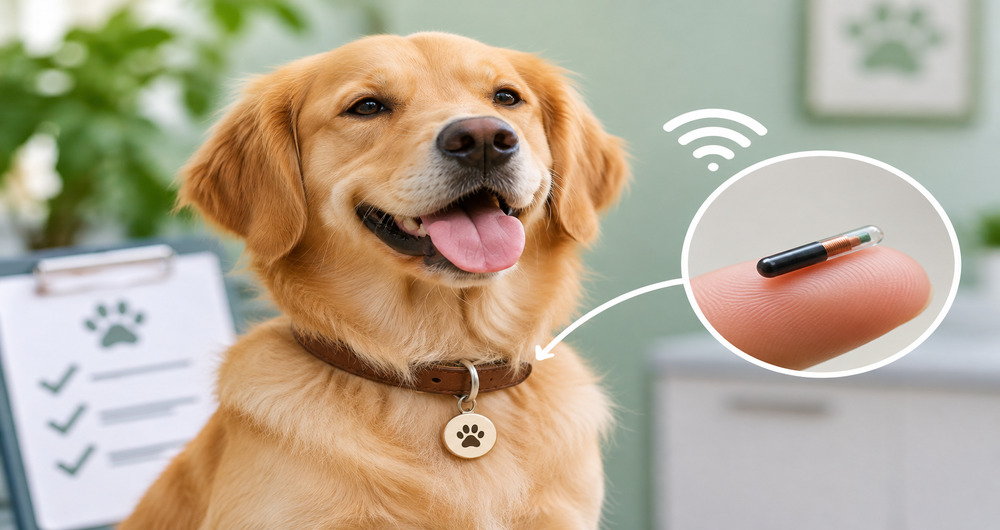
Dog microchipping is an identification procedure in which a tiny electronic chip, about the size of a grain of rice, is placed under the dog’s skin. It carries a unique number that can be read with a compatible scanner.
This number is linked to the owner’s contact details in a registration database. If a lost dog is taken to a veterinary clinic or shelter, staff can scan the dog and use the registered details to contact the owner. A microchip does not store your address or work as a live tracking device.
Benefits of Dog Microchipping
Microchipping adds another layer of identification for dogs.
1. Helps identify lost dogs: A veterinary clinic, shelter, or rescue centre can scan a found dog. If the details are registered and current, staff can contact the owner.
2. Provides permanent identification: Unlike collars and tags, a microchip stays beneath the skin and cannot be easily lost or removed.
3. Supports ownership identification: The registered number links your dog to your contact details.
4. Can support travel requirements: Microchip identification may be needed for some international pet travel processes. Check the destination’s current rules with your veterinarian before travelling.
5. Adds peace of mind: A microchip offers another way to identify your dog if its collar is missing.
How Is a Dog Microchip Implanted?
The procedure is usually quick and can often be done during a routine veterinary appointment. The veterinarian first scans your dog to check for an existing chip and avoid unnecessary duplication.
The chip is inserted beneath the skin, commonly between the shoulder blades, using a sterile applicator and needle. The process is similar to an injection. Your dog may feel brief discomfort, but general anesthesia is not usually required.
After implantation, the veterinarian scans the chip and explains how to register it. Microchips should be implanted by a veterinarian or under veterinary supervision, not at home.
What Is the Cost of Dog Microchipping?
The cost varies according to the clinic, chip type, and whether consultation or registration charges are included. Ask what the fee covers, including the chip, implantation, scanning, and registration.
It is generally a one-time expense. Keep registration details current and check whether updates involve separate fees.
Is Dog Microchipping Safe?
Dog microchipping is widely considered safe, and serious complications are uncommon. Some dogs may experience brief tenderness, mild swelling, or irritation at the injection site. Rarely, a chip may move from its original position or an infection may develop.
Contact your veterinarian if swelling persists, discharge appears, or your dog seems uncomfortable. Ask the veterinary team to scan the chip during routine check-ups to confirm it can still be detected.
What Should You Do After Microchipping?
Register the chip number and check that your phone number, email, and address are correct. Update them when they change.
Continue using a collar and visible ID tag. A microchip complements these forms of identification; it does not replace them. It is also not a GPS tracker and cannot show your dog’s live location. It helps identify your pet when someone finds them and scans the chip.
Final Thoughts
Dog microchipping gives your pet permanent identification and may help reunite lost dogs with their families. Keep your registration details updated and ask your veterinarian to scan the chip during routine visits.
If you are considering microchipping your dog, speak with a veterinarian about the right chip and registration process. Seven Oaks Pet Hospital can help pet parents understand identification options.
Disclaimer:
This article is intended for educational purposes only and should not replace professional veterinary advice. If your pet is showing signs of illness or discomfort, please consult Seven Oaks or the nearest qualified veterinarian for an accurate diagnosis and appropriate treatment.
FAQ’s
Puppies can often be microchipped when young, but timing depends on their size and health. Ask your veterinarian.
No. It stores an identification number and does not provide GPS tracking.
A dog may feel a brief pinch during insertion. Most tolerate the procedure without anaesthesia.
Microchips are designed for long-term use and generally do not need battery changes. Ask your veterinarian to scan it during routine visits.