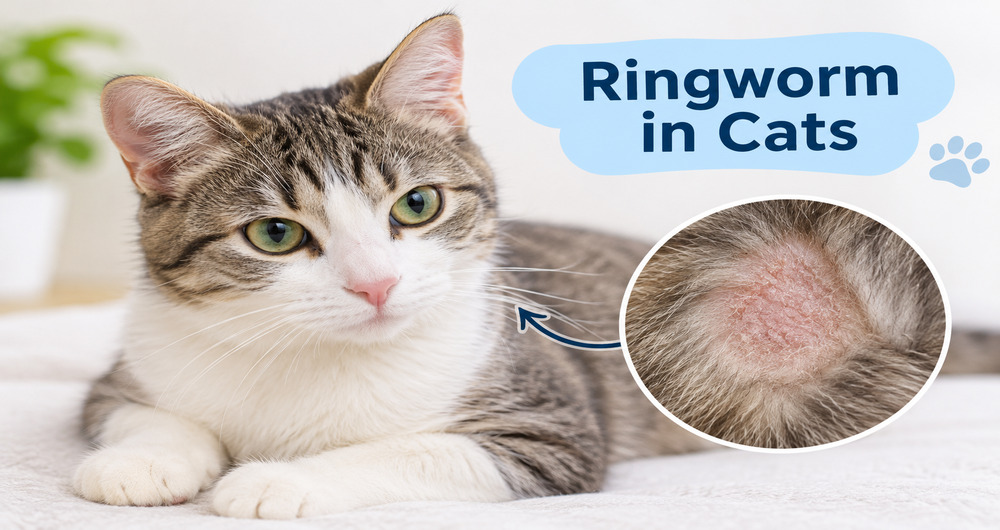
Have you noticed circular bald patches, flaky skin, or excessive scratching on your cat? These symptoms may indicate a fungal infection affecting your cat’s skin, commonly known as ringworm. Although its name suggests a parasite, ringworm in cats is actually caused by fungi that affect the skin, hair, and sometimes the nails.
This condition can affect cats of all ages and is particularly common in kittens. It can also spread to other pets and humans, making early diagnosis and proper treatment important. Understanding its symptoms, causes, and prevention methods can help you protect your cat’s health.
What Is Ringworm in Cats?
Ringworm, medically known as dermatophytosis, is a contagious fungal infection that affects the outer layers of a cat’s skin, hair, and claws. It is commonly caused by a fungus called Microsporum canis.
The infection often produces circular patches of hair loss with dry, scaly skin. However, not every infected cat develops visible ring-shaped marks. Some cats may carry the fungus without showing noticeable symptoms.
What Are the Common Symptoms of Ringworm in Cats?
Recognizing the early signs of feline ringworm can help you seek veterinary care before the infection spreads.
Common cat ringworm symptoms include:
- Circular hair loss: Small, round patches of missing fur, commonly around the face, ears, and legs.
- Scaly skin: Dry, flaky, or crusty patches around affected areas.
- Broken hair: Fur may appear rough, uneven, or broken near the skin.
- Redness and irritation: Infected areas may become inflamed or uncomfortable.
- Excessive scratching: Some cats may scratch, lick, or groom affected areas frequently.
- Nail problems: In certain cases, the infection can affect the claws, causing roughness or abnormal growth.
If your cat develops unexplained hair loss or skin irritation, consult a veterinarian rather than assuming it is ringworm.
What Causes Ringworm in Cats?
Ringworm spreads through microscopic fungal spores that can survive in the environment for extended periods. Cats can become infected through:
- Direct contact: Touching an infected cat or another animal carrying the fungus.
- Contaminated objects: Sharing grooming brushes, bedding, toys, or food accessories.
- Infected environments: Coming into contact with contaminated carpets, furniture, or surfaces.
- Contact with infected humans: The fungus can also spread between people and animals.
Kittens, older cats, and pets with weakened immune systems may be more vulnerable to infection. Cats living in multi-pet households or crowded environments may also face a higher risk.
How Is Ringworm in Cats Diagnosed?
Ringworm may look similar to other skin issues, such as allergic reactions, parasite-related infections, and bacterial conditions. Therefore, visual examination alone may not confirm the infection.
A veterinarian may recommend:
- Wood’s lamp examination: A special ultraviolet light helps identify certain infected hairs.
- Fungal culture: Hair or skin samples are collected to check for fungal growth.
- Microscopic examination: A veterinarian examines affected hairs and skin samples for fungal spores.
- PCR testing: This test detects fungal genetic material and can help identify the infection.
The veterinarian selects the appropriate diagnostic method based on your cat’s symptoms and condition.
How to Treat Ringworm in Cats?
Ringworm treatment depends on the severity of the infection and the areas affected. A veterinarian may recommend a combination of treatments, such as:
- Antifungal creams: Applied to affected skin areas to control fungal growth.
- Medicated shampoos or dips: Help reduce fungal spores on the cat’s coat.
- Oral antifungal medication: May be prescribed when the infection is widespread or requires additional treatment.
Treatment can take several weeks or longer, depending on the response. Follow your veterinarian’s instructions and complete the recommended treatment course, even if the visible symptoms disappear.
Avoid using human antifungal creams or home remedies without veterinary advice.
How to Prevent Ringworm in Cats?
Good hygiene and regular monitoring can reduce the risk of fungal infections and reinfection.
- Keep your cat’s bedding, toys, and grooming accessories clean.
- Wash your hands after handling an infected cat.
- Vacuum floors and furniture regularly to remove infected hair.
- Disinfect suitable surfaces using veterinarian-approved products.
- Limit contact between infected and healthy pets during treatment.
- Have newly adopted cats examined before introducing them to other pets.
Since ringworm can spread to humans, family members should also take precautions. Anyone developing suspicious skin lesions after contact with an infected pet should consult a healthcare professional.
When Should You Take Your Cat to a Veterinarian?
If your cat develops bald patches, persistent itching, flaky skin, or unusual changes around its claws, arrange a veterinary examination. Early diagnosis can help prevent the infection from spreading and reduce discomfort.
Final Thoughts
Ringworm in cats is a treatable fungal infection, but ignoring its symptoms can allow it to spread to other animals and family members. Recognizing early warning signs, maintaining proper hygiene, and following veterinary treatment recommendations are essential for recovery.
At Seven Oaks Pet Hospital, we believe that timely veterinary attention and preventive care play an important role in keeping pets healthy. If you notice unusual skin changes in your cat, consult a veterinarian for an appropriate diagnosis and treatment plan.
Disclaimer:
This article is intended for educational purposes only and should not replace professional veterinary advice. If your pet is showing signs of illness or discomfort, please consult Seven Oaks or the nearest qualified veterinarian for an accurate diagnosis and appropriate treatment.
FAQ’s
Common symptoms include circular bald patches, flaky or crusty skin, broken hair, redness, and itching. These signs often appear around the ears, face, and legs.
Yes, ringworm can spread from infected cats to humans through direct contact or contaminated objects. Proper hygiene and cleaning can help prevent transmission.
Ringworm in cats is treated with antifungal creams, medicated shampoos, or oral antifungal medications prescribed by a veterinarian, depending on the severity of the infection.
Ringworm can take several weeks or longer to resolve. Treatment duration depends on the severity of the infection and how well the cat responds to medication.
Yes, indoor cats can develop ringworm through contaminated bedding, grooming tools, furniture, or contact with infected animals and people.