If your dog is straining to poop, passing small, hard stools, or hasn’t had a bowel movement as usual, constipation could be the reason. While occasional constipation may be mild, it can sometimes indicate an underlying health problem that needs veterinary attention.
Understanding the causes of constipation in dogs, its symptoms, and when to seek treatment can help you take the right steps to keep your pet comfortable.
What Is Constipation in Dogs?
Constipation occurs when a dog has difficulty passing stools. The stool may become hard, dry, or difficult to pass, and your dog may strain without producing much.
A temporary change in bowel movements is not always serious, but persistent constipation should not be ignored, especially if your dog is showing signs of pain or discomfort.
Common Causes of Dog Constipation
Several factors can contribute to constipation in dogs, including:
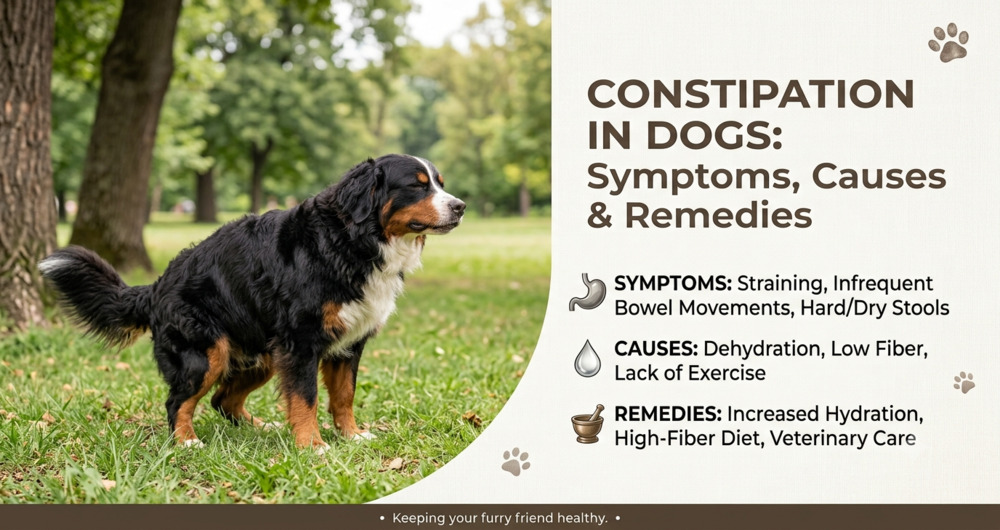
- Dehydration: Not drinking enough water can make stools harder.
- Lack of exercise: Reduced activity may slow normal bowel movements.
- Dietary changes: Sudden changes in food or insufficient dietary fibre can affect digestion.
- Eating bones or indigestible objects: These may make stools difficult to pass.
- Pain or discomfort: Joint pain, injuries, or pain around the hindquarters can make defecation difficult.
- Underlying health conditions: Certain digestive, neurological, or other medical problems may contribute to constipation.
- Medications: Some medications can affect normal bowel movements.
Identifying the cause is important because treatment depends on why your dog is constipated.
Signs of Constipation in Dogs
Common symptoms include:
- Straining to poop
- Passing small, hard, or dry stools
- Going longer than usual without pooping
- Circling or repeatedly trying to defecate
- Discomfort while passing stool
- Reduced appetite
- Vomiting or lethargy in more serious cases
If your dog is repeatedly straining but cannot pass stool, or is showing pain, it is best to consult a veterinarian rather than waiting for the problem to worsen.
What Can You Give Your Dog for Constipation?
The right treatment depends on the underlying cause. A veterinarian may recommend dietary changes, increased hydration, or other appropriate treatment after examining your dog.
Do not give human laxatives, enemas, or home remedies without veterinary advice. Some products may be unsafe for dogs, and constipation caused by an obstruction requires a different approach.
If your dog has eaten bones or a foreign object, attempting to treat the constipation at home may delay necessary care.
When Is Dog Constipation an Emergency?
Seek veterinary attention promptly if your dog has:
- Repeated straining with no stool
- Severe abdominal pain
- Vomiting
- A swollen or painful abdomen
- Marked lethargy
- Blood in the stool
- Suspected ingestion of bones or foreign objects
These signs may indicate a more serious problem, such as an intestinal obstruction or another condition requiring immediate treatment.
How to Help Prevent Constipation in Dogs
You can support your dog’s digestive health by:
- Providing fresh drinking water
- Feeding a balanced, appropriate diet
- Encouraging regular exercise
- Avoiding sudden dietary changes
- Preventing access to bones and indigestible objects
- Monitoring your dog’s bowel movements
- Scheduling regular veterinary checkups
When Should You See a Vet?
If constipation persists, keeps returning, or is accompanied by other symptoms, a veterinary examination is important. Your veterinarian can assess your dog’s overall health, identify the possible cause, and recommend suitable treatment.
At Seven Oaks Pet Hospital, our veterinary team helps pet parents understand digestive concerns and provides appropriate care based on each pet’s condition. If your dog is struggling to poop or showing signs of discomfort, early veterinary attention can help prevent the problem from becoming more serious.
Is your dog experiencing constipation? Contact Seven Oaks Pet Hospital to discuss the next steps for your pet’s care.
Disclaimer:
This article is intended for educational purposes only and should not replace professional veterinary advice. If your pet is showing signs of illness or discomfort, please consult Seven Oaks or nearest qualified veterinarian for an accurate diagnosis and appropriate treatment.