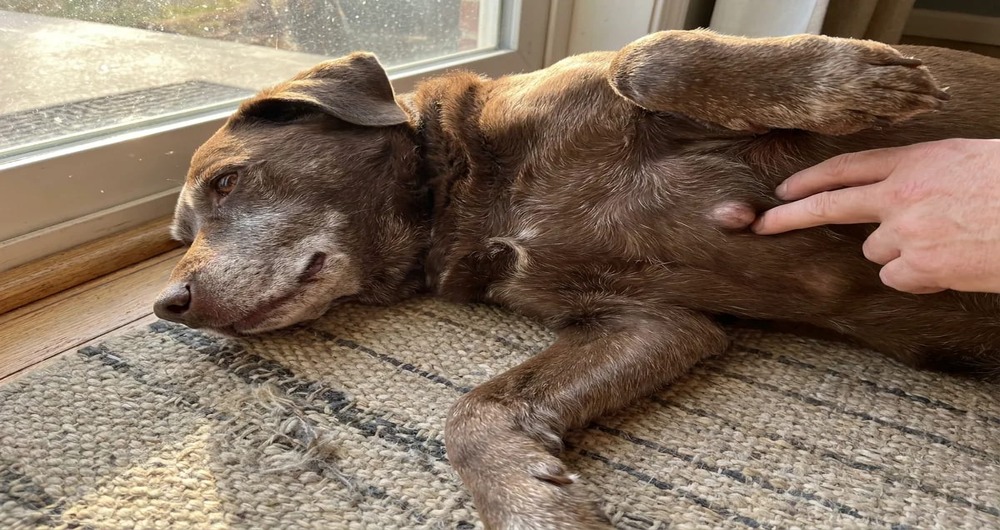
Finding a lump on your dog can be worrying, especially when you don’t know what it is. One common type of lump found in dogs is a lipoma. Lipomas are usually benign (non-cancerous) fatty growths that develop under the skin and are particularly common in middle-aged and older dogs.
While most lipomas are harmless, every new lump should be examined by a veterinarian to determine exactly what it is.
What Is a Lipoma in Dogs?
A lipoma is a soft, fatty lump that develops beneath a dog’s skin. It is made up primarily of fat cells and is generally slow-growing and non-cancerous.
Lipomas can develop anywhere on the body but are commonly found around the chest, abdomen, legs, and trunk. Some dogs may develop more than one lipoma over time.
At Seven Oaks Pet Hospital, our veterinary team can examine unusual lumps and recommend appropriate diagnostic tests to determine whether a growth is a lipoma or something that needs further attention.
What Causes Lipomas in Dogs?
The exact cause of lipomas is not fully understood. However, they are more frequently seen in older and overweight dogs.
Factors that may be associated with lipomas include:
- Age
- Genetics
- Breed predisposition
- Being overweight or obese
- Changes in fat-cell growth
Maintaining a healthy weight is important for your dog’s overall health, although it does not guarantee prevention of lipomas.
Symptoms of Lipoma in Dogs
Lipomas often have a few noticeable characteristics. They may appear as:
- Soft or slightly rubbery lumps beneath the skin
- Smooth, rounded growths
- Slowly increasing in size
- Movable under the skin
- Usually painless when touched
Many dogs show no other symptoms. However, a lump that grows rapidly, becomes painful, changes in texture, or affects movement should be evaluated by a veterinarian.
Are Lipomas in Dogs Dangerous?
Most ordinary lipomas are benign and not dangerous. However, not every lump is a lipoma. Other growths can sometimes feel similar.
That is why it is important to have new lumps examined professionally rather than trying to identify them at home.
How Are Lipomas Diagnosed?
Your veterinarian will assess the lump’s size, location, shape, texture, and mobility. A common diagnostic procedure is a fine-needle aspiration (FNA), where a small sample of cells is collected and examined.
At Seven Oaks Pet Hospital, appropriate diagnostic evaluation can help determine the nature of a lump and guide the next steps in your dog’s care.
Treatment Options for Lipoma in Dogs
Not every lipoma requires treatment. If it is confirmed as benign and is not causing problems, your veterinarian may recommend monitoring it over time.
Surgical removal may be considered if the lipoma:
- Grows rapidly
- Becomes large or uncomfortable
- Interferes with movement
- Is located in a problematic area
- Has unusual characteristics
Your veterinarian will recommend the most appropriate option based on your dog’s individual condition.
When Should You Take Your Dog to the Vet?
Contact your veterinarian if a lump:
- Grows quickly
- Changes in size, shape, or texture
- Becomes painful
- Feels firm or fixed
- Bleeds or develops a wound
- Interferes with movement
If you notice a new lump on your dog, Seven Oaks Pet Hospital can help assess it and determine whether further investigation or treatment is needed.
Final Thoughts
Lipomas are common in dogs and are usually benign fatty growths. However, every new or changing lump deserves professional evaluation.
Don’t panic when you find a lump—but don’t ignore it either. A timely veterinary examination can help identify the cause and ensure your dog receives the right care when needed.
Disclaimer:
This article is intended for educational purposes only and should not replace professional veterinary advice. If your pet is showing signs of illness or discomfort, please consult Seven Oaks or the nearest qualified veterinarian for an accurate diagnosis and appropriate treatment.