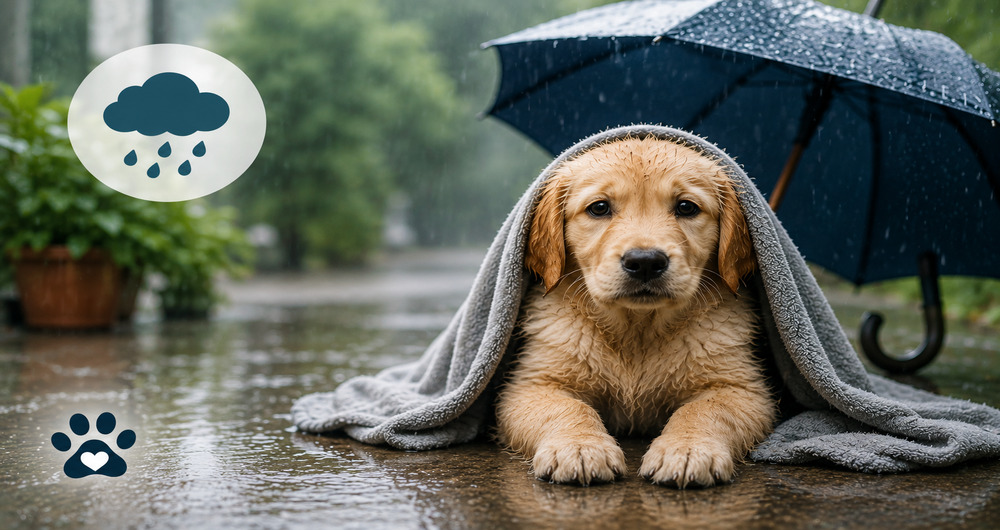
The monsoon season offers cooler weather and refreshing rains, but it also creates conditions that can affect your dog’s health. Increased humidity, muddy surroundings, stagnant water, and a rise in parasites make rainy months challenging for pet owners. While most people take extra care during monsoons, some everyday habits can unknowingly put their dogs at risk.
Knowing what not to do is just as important as knowing the right care practices. Here are ten common monsoon mistakes every dog owner should avoid.
1. Leaving Your Dog Wet After a Walk
Many dogs return home soaked after enjoying a rainy walk. Allowing their coat to remain wet for long periods can lead to fungal infections, hot spots, skin irritation, and an unpleasant smell.
Always dry your dog’s coat thoroughly, paying extra attention to the paws, underbelly, ears, and tail. Long-haired breeds may require additional grooming to ensure no moisture remains trapped in the fur.
2. Forgetting to Clean Muddy Paws
Dogs walk through mud, puddles, and contaminated surfaces during the monsoon. Dirt and bacteria can remain between their paw pads, increasing the risk of infections or causing them to lick harmful substances.
Wipe or rinse your dog’s paws after every outdoor walk and dry them properly before they settle indoors.
3. Allowing Dogs to Drink from Puddles
Rainwater collected on roads or in parks may contain bacteria, parasites, chemicals, or sewage contamination. Drinking from puddles can expose dogs to gastrointestinal infections and other illnesses.
Carry fresh drinking water during walks so your dog stays hydrated without needing to drink from unsafe water sources.
4. Ignoring Tick and Flea Protection
Humidity creates ideal breeding conditions for ticks and fleas. These parasites not only cause itching but can also transmit diseases and trigger allergic reactions.
Continue using veterinarian-recommended parasite prevention throughout the rainy season and check your dog’s coat regularly after outdoor activities.
5. Bathing Too Frequently
Because dogs become dirty more often during monsoons, many owners increase bathing frequency. However, frequent bathing can strip natural oils from the skin, leading to dryness, itching, and irritation.
Instead of bathing after every muddy walk, wipe your dog with a damp towel when possible and use a mild pet shampoo only when a full bath is necessary.
6. Neglecting Ear Care
Moisture trapped inside the ears creates an ideal environment for bacteria and yeast to grow, especially in dogs with floppy ears.
Watch for signs such as head shaking, scratching, unpleasant odor, redness, or discharge. Regular ear inspections and proper drying after baths can help prevent ear infections.
7. Reducing Exercise Completely
Rainy weather often discourages daily walks, but skipping exercise altogether can lead to boredom, weight gain, and behavioral issues.
When outdoor walks aren’t possible, engage your dog with indoor games, obedience training, scent activities, or puzzle toys to keep both body and mind active.
8. Keeping Damp Bedding
A wet sleeping area encourages mold, bacteria, and fungal growth. Constant exposure to damp bedding may contribute to skin problems and discomfort.
Ensure your dog’s bedding stays dry, clean, and well-ventilated. Wash blankets regularly and replace any bedding that remains damp.
9. Overlooking Early Signs of Illness
Minor symptoms such as excessive scratching, licking paws, shaking ears, or reduced appetite are sometimes dismissed as seasonal discomfort. In reality, they may indicate infections or allergies that require attention.
Observing your dog’s daily behavior helps identify health issues before they become serious.
10. Assuming Indoor Dogs Are Completely Safe
Many owners believe indoor pets face fewer monsoon-related risks. However, parasites, damp floors, contaminated footwear, and reduced ventilation can still affect dogs that rarely go outside.
Maintaining indoor hygiene, regular grooming, and preventive healthcare remains equally important for indoor pets.
Helpful Monsoon Care Tips
Besides avoiding these common mistakes, following a few simple practices can help your dog stay comfortable throughout the rainy season:
- Dry your dog completely after every walk.
- Keep paws clean and inspect them regularly.
- Maintain regular grooming to prevent matting.
- Ensure fresh drinking water is always available.
- Keep living spaces dry and well-ventilated.
- Continue parasite prevention as advised by your veterinarian.
- Feed a balanced diet to support immunity.
- Avoid walking in areas with stagnant water.
Final Thoughts
Monsoon brings its own set of challenges, but with a little extra attention, most seasonal health problems can be prevented. Good hygiene, regular grooming, parasite control, and early observation of unusual symptoms go a long way in keeping dogs healthy during the rainy months.
By avoiding these common mistakes and following simple preventive measures, pet owners can help their dogs enjoy the monsoon safely while staying active, clean, and comfortable throughout the season. If you notice any signs of skin infections, ear problems, digestive issues, or unusual behavior, seeking timely veterinary care is essential. The experienced team at Seven Oaks Pet Hospital is always available to provide expert guidance and comprehensive care, helping your furry companion stay healthy through every season.
Disclaimer:
This article is intended for educational purposes only and should not replace professional veterinary advice. If your pet is showing signs of illness or discomfort, please consult Seven Oaks or the nearest qualified veterinarian for an accurate diagnosis and appropriate treatment.