When your pet is unwell, routine tests such as blood work, X-rays, or ultrasound can often help your veterinarian identify the problem. But sometimes, the answers aren’t clear enough. That’s when advanced diagnostic imaging, such as a veterinary CT scan, can provide a much more detailed look inside your pet’s body.
A CT scan can help veterinarians detect conditions that may be difficult to see with standard imaging and can also provide valuable information for treatment or surgical planning. But when would your dog or cat actually need one? Let’s understand.
What Is a Pet CT Scan?
CT stands for Computed Tomography. It uses X-rays combined with computer processing to create detailed cross-sectional images, or “slices,” of the body. Unlike a standard X-ray, where structures can overlap, CT allows veterinarians to examine an area from multiple angles and evaluate bones, organs, soft tissues, blood vessels, and other structures in greater detail.
A dog CT scan or cat CT scan may therefore be recommended when regular diagnostic imaging does not provide enough information or when a veterinarian needs a more precise picture before deciding on treatment.
When Might Your Dog or Cat Need a CT Scan?
1. Unexplained Nasal or Breathing Problems
Persistent nasal discharge, nosebleeds, facial swelling, chronic sneezing, or certain breathing problems may require more detailed investigation. CT is particularly useful for examining the nasal passages, sinuses, skull, and chest, helping veterinarians look for masses, structural abnormalities, infections, or other changes.
2. Suspected Tumours or Cancer
One of the important applications of a veterinary CT scan is evaluating suspected tumours. CT imaging can help determine the size and exact location of a mass and show how closely it is associated with surrounding tissues. It may also be used when planning surgery or radiation therapy.
For pets already diagnosed with certain cancers, CT may also form part of the staging process when recommended by the veterinary team.
3. Complex Bone or Joint Problems
Has your dog been limping even though initial X-rays haven’t provided a complete answer? A dog CT scan can provide highly detailed images of bones and joints and may be useful for complex fractures, certain orthopaedic conditions, bone tumours, or surgical planning.
Because CT removes much of the problem of overlapping structures seen on standard X-rays, small or complicated skeletal abnormalities can sometimes be assessed more clearly.
4. Trauma or Serious Injuries
After significant trauma, veterinarians may need to quickly evaluate areas such as the skull, chest, spine, or bones. CT can produce detailed images rapidly, making it a valuable diagnostic tool in selected trauma cases.
5. Certain Abdominal or Blood Vessel Conditions
CT can also help investigate some diseases affecting the abdomen and blood vessels. For example, it may be used to evaluate certain liver abnormalities, adrenal masses, abdominal tumours, or abnormal blood vessels such as vascular liver shunts.
Does Your Pet Need Anaesthesia for a CT Scan?
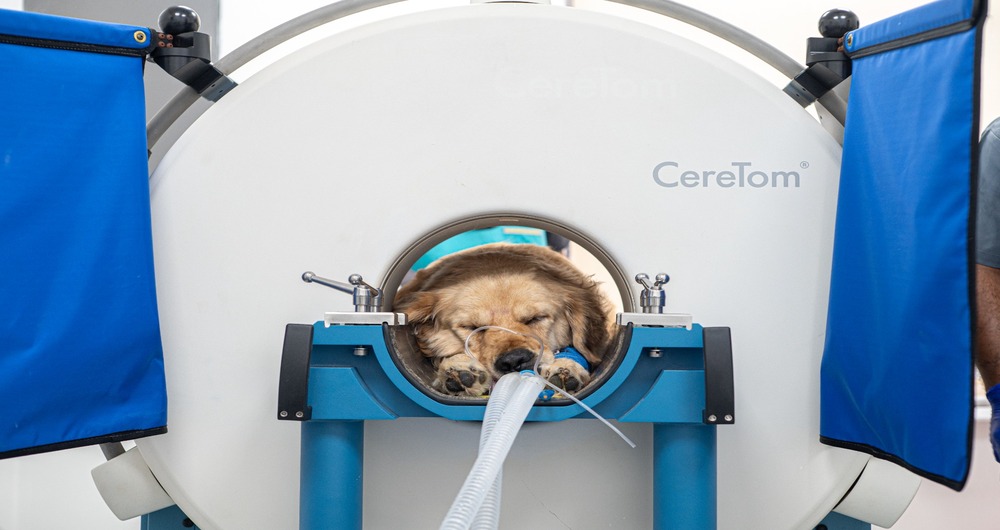
Pets must remain extremely still during imaging because movement can blur the images. For this reason, sedation or general anaesthesia is commonly used during CT examinations. The exact approach depends on the type of scan, the pet’s condition, and the hospital’s protocol.
Before the procedure, your veterinarian may perform a physical examination and review blood tests or other diagnostic results to assess your pet before sedation or anaesthesia.
In some cases, an intravenous contrast agent may also be administered to make certain tissues, blood vessels, inflammation, or tumours easier to distinguish.
CT Scan or MRI: Which Does Your Pet Need?
CT and MRI are both advanced imaging techniques, but they are not interchangeable. CT is particularly useful for evaluating bones, the lungs and chest, nasal structures, and many tumours. MRI generally provides superior soft-tissue detail and is often preferred for evaluating conditions affecting areas such as the brain and spinal cord.
Your veterinarian will recommend the imaging method that best matches your pet’s symptoms and suspected condition.
A Clearer Picture Can Lead to Better Decisions
Being told that your pet needs a CT scan can sound worrying, but the recommendation does not automatically mean something serious has been found. Often, it simply means your veterinarian needs better information to make the right diagnosis or treatment decision.
Whether it is a dog CT scan, cat CT scan, or another advanced imaging test, the goal is the same: to understand what is happening inside your pet as accurately as possible and determine the most appropriate next step.
Dedicated Pet CT Scan at Seven Oaks Pet Hospital, Jubilee Hills
For pets who need advanced diagnostic imaging, Seven Oaks Pet Hospital, Jubilee Hills, offers India’s first dedicated CT scan facility for pets. High-resolution imaging helps veterinarians examine complex conditions more clearly and make informed treatment decisions faster.
A pet CT scan can be especially useful for evaluating conditions involving the brain, spine, chest, joints, tumors, internal bleeding, and certain infections.
At Seven Oaks Pet Hospital, the procedure is supported by safe sedation protocols and expert monitoring, helping ensure your pet remains comfortable and still while accurate images are captured.
With clearer imaging and faster diagnosis, veterinarians can plan the next steps in your pet’s treatment with greater confidence.
Disclaimer:
This article is intended for educational purposes only and should not replace professional veterinary advice. If your pet is showing signs of illness or discomfort, please consult Seven Oaks or the nearest qualified veterinarian for an accurate diagnosis and appropriate treatment.