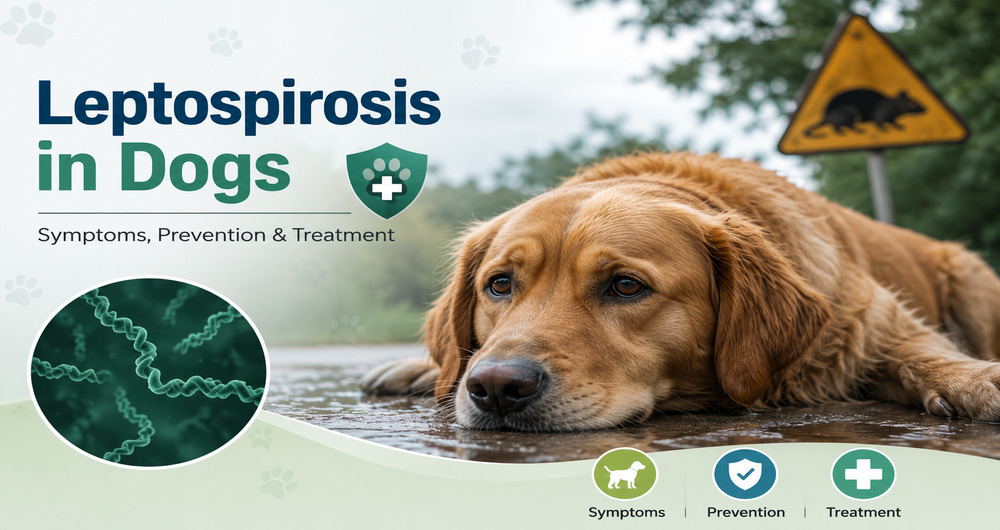
Leptospirosis is a serious bacterial infection that can affect dogs, especially during the monsoon season. Stagnant water, muddy areas, and increased rodent activity create the perfect conditions for the bacteria to spread. While a playful splash in a puddle may seem harmless, it can sometimes expose your dog to this potentially life-threatening disease.
Knowing the symptoms, preventive measures, and treatment options can help you protect your pet and seek timely veterinary care.
What is Leptospirosis in Dogs?
Leptospirosis is caused by Leptospira bacteria, which spread through the urine of infected animals such as rats, cattle, pigs, and wildlife. Dogs usually become infected by drinking or walking through contaminated water, soil, or food.
The bacteria enter the body through small cuts in the skin or through the nose, mouth, or eyes. Once inside, they can travel through the bloodstream and damage vital organs, particularly the kidneys and liver.
Leptospirosis is also a zoonotic disease, meaning it can spread from infected animals to humans, making early diagnosis especially important.
Symptoms of Leptospirosis in Dogs
The severity of symptoms varies from mild illness to life-threatening complications. Common signs include:
- Fever
- Loss of appetite
- Lethargy or weakness
- Vomiting and diarrhea
- Increased thirst and urination
- Muscle pain or stiffness
- Yellowing of the eyes or gums (jaundice)
- Blood in urine in severe cases
These symptoms can resemble several other illnesses, so professional veterinary evaluation is essential for an accurate diagnosis.
How Do Dogs Get Leptospirosis?
Dogs can be exposed to leptospirosis through:
- Drinking from puddles or stagnant water
- Walking through floodwater or muddy areas
- Contact with infected rodents or wildlife
- Contaminated soil or food
The risk increases during the rainy season, when bacteria survive longer in moist environments.
Diagnosis
A veterinarian will assess your dog’s symptoms, recent activities, and possible exposure to contaminated environments. Diagnosis may involve:
- Blood tests
- Urine tests
- PCR testing
- Kidney and liver function tests
Early diagnosis helps prevent severe organ damage and improves recovery outcomes.
Treatment
Leptospirosis can usually be treated successfully when detected early. Treatment may include:
- Antibiotics to eliminate the infection
- Intravenous fluids for hydration
- Medications to control vomiting and discomfort
- Supportive care for kidney and liver function
Dogs with severe infections may require hospitalization and close monitoring until they recover.
How to Prevent Leptospirosis
Prevention is the best way to protect your dog. Follow these simple precautions:
- Keep your dog’s leptospirosis vaccination up to date.
- Prevent your dog from drinking stagnant or floodwater.
- Control rodents around your home.
- Maintain clean surroundings.
- Wash your dog’s paws after rainy-day walks.
- Schedule regular veterinary health check-ups.
Vaccination is one of the most effective ways to reduce the risk of infection, particularly in areas where leptospirosis is common.
When Should You Visit a Veterinarian?
Seek veterinary care immediately if your dog develops fever, vomiting, weakness, or loss of appetite after being exposed to rainwater or muddy surroundings. Early treatment can prevent serious complications affecting the kidneys, liver, and lungs.
Veterinary hospitals such as Seven Oaks Pet Hospital often see an increase in seasonal infections like leptospirosis during the monsoon. Prompt evaluation helps ensure timely diagnosis and appropriate treatment before the condition becomes severe.
Final Thoughts
Leptospirosis is a preventable disease, but it requires awareness and quick action. Keeping vaccinations current, avoiding contaminated water, maintaining good hygiene, and recognizing early symptoms can greatly reduce your dog’s risk.
If your pet shows any warning signs after outdoor exposure during the rainy season, don’t delay seeking veterinary care. Early diagnosis and treatment can significantly improve recovery and help your dog return to a healthy, active life.
Disclaimer:
This article is intended for educational purposes only and should not replace professional veterinary advice. If your pet is showing signs of illness or discomfort, please consult Seven Oaks or the nearest qualified veterinarian for an accurate diagnosis and appropriate treatment.