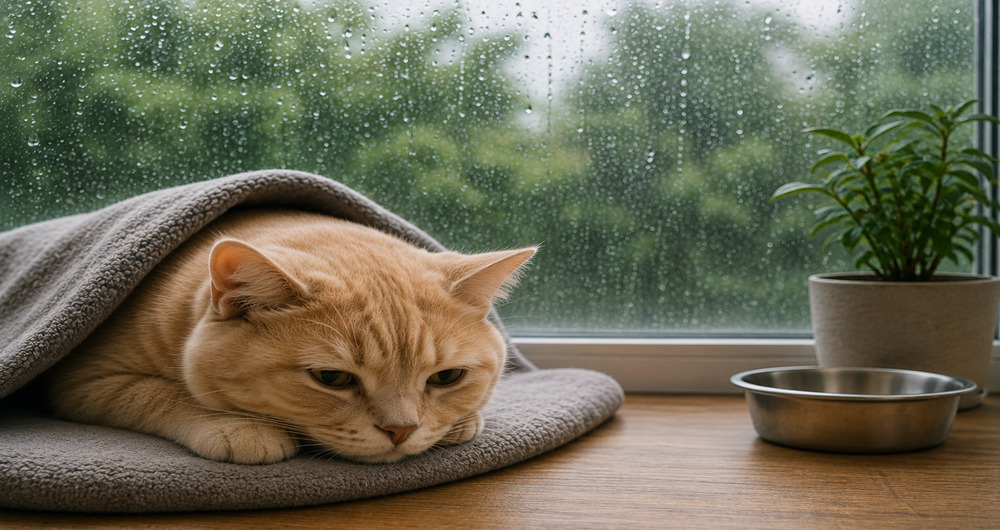
Monsoons bring cooler temperatures and relief from summer heat, but increased humidity, damp surroundings, and stagnant water can create health challenges for cats. Even indoor cats may be affected by changes in moisture, ventilation, and parasite activity during the rainy season.
Cats are also experts at hiding discomfort. Changes in appetite, grooming habits, energy levels, or behavior may be the first signs that something is wrong. Knowing the common health problems in cats during monsoon can help pet parents take preventive action and seek veterinary care when necessary.
Key Takeaways
- Humidity can increase the risk of skin and fungal problems in cats.
- Fleas and ticks may become more active during rainy weather.
- Damp environments can contribute to ear and respiratory problems.
- Clean food, fresh water, and dry bedding are essential during monsoon.
- Persistent or unusual symptoms should be evaluated by a veterinarian.
1. Skin and Fungal Infections
High humidity can create favorable conditions for fungal growth and skin irritation. Cats may be more vulnerable when their fur stays damp or their surroundings are not properly ventilated.
Common signs include excessive scratching, frequent licking, redness, hair loss, flaky skin, or circular bald patches. Avoid applying human creams or antifungal medicines without veterinary guidance, as the appropriate treatment depends on the underlying cause.
2. Fleas and Ticks
Rainy weather can increase flea and tick activity. Cats that spend time outdoors may pick up parasites from grass, soil or other animals. Fleas can cause persistent itching and skin irritation, while heavy infestations may lead to additional health concerns.
Check your cat’s coat regularly, particularly around the neck, ears, belly, and legs. Ask your veterinarian about a suitable parasite-prevention routine for your cat.
3. Ear Infections
Humidity and moisture may contribute to ear irritation and infections. Cats with allergies or existing ear problems may experience increased discomfort during monsoon.
Watch for head shaking, repeated ear scratching, redness, unusual discharge, or a bad smell from the ears. Never insert cotton buds deep into your cat’s ears or use household remedies without veterinary advice.
4. Respiratory Problems
Changes in temperature, damp rooms, and poor ventilation may contribute to respiratory problems in some cats. Sneezing, nasal discharge, watery eyes, and coughing can indicate an underlying issue.
While occasional sneezing may not always be serious, persistent symptoms, extreme tiredness or breathing difficulty should not be ignored. Difficulty breathing requires prompt veterinary attention.
5. Digestive Problems
During monsoon, improper food storage and contaminated water can increase the risk of digestive upset. Outdoor cats may also come into contact with dirty puddles or other potentially contaminated sources.
Vomiting, diarrhea, reduced appetite, and unusual lethargy can be signs of digestive problems. Provide fresh drinking water and store cat food properly to maintain its quality.
6. Stress and Reduced Activity
Heavy rain, thunder, and changes in routine can make some cats anxious or less active. Instead of forcing your cat to play or go outdoors, provide a quiet, comfortable space where it can retreat.
Interactive toys, scratching posts, and short indoor play sessions can help keep cats mentally stimulated when outdoor activity is limited.
How to Keep Your Cat Healthy During Monsoon
Simple preventive measures can make a significant difference:
- Keep bedding clean and completely dry.
- Gently dry your cat if its coat gets wet.
- Clean the litter box regularly and keep it away from damp areas.
- Provide clean, fresh drinking water.
- Keep food bowls and feeding areas hygienic.
- Maintain regular flea and tick prevention.
- Brush your cat regularly to monitor skin and coat changes.
- Keep indoor spaces clean and adequately ventilated.
- Stay up to date with recommended vaccinations and veterinary check-ups.
When Should You Visit a Vet?
Contact a veterinarian if your cat develops persistent vomiting or diarrhoea, stops eating, becomes unusually lethargic, has breathing difficulties, develops severe itching or hair loss, or shows signs of an ear or skin infection.
Early veterinary attention can help identify the cause and prevent a minor seasonal problem from becoming more serious.
Frequently Asked Questions
Yes. Humidity, parasites, contaminated water, damp surroundings, and changes in temperature can contribute to several health problems in cats.
Keep your cat’s environment clean and dry, provide safe food and water, maintain parasite prevention, and monitor your cat for changes in behavior or health.
Not necessarily. Frequent bathing can sometimes irritate a cat’s skin. Regular brushing and keeping the coat dry and clean are generally more important. Speak with your veterinarian if your cat has a specific skin condition.
Final Thoughts
Monsoon care for cats is mainly about cleanliness, dryness, parasite control, and early observation. Paying attention to changes in your cat’s skin, coat, ears, appetite, and behavior can help you identify potential problems early. If symptoms persist or your cat appears unwell, consult a veterinarian for proper evaluation and treatment.
Disclaimer:
This article is intended for educational purposes only and should not replace professional veterinary advice. If your pet is showing signs of illness or discomfort, please consult Seven Oaks or the nearest qualified veterinarian for an accurate diagnosis and appropriate treatment.