Feeding a pet bird is about more than simply filling its bowl. Birds need a balanced combination of nutrients to maintain healthy feathers, strong bones, good energy levels, and overall well-being. While seeds are a favorite for many birds, relying only on them may not provide complete nutrition.
A healthy diet often includes pellets, fresh vegetables and suitable fruits, with seeds offered in moderation. However, the right combination depends on the bird’s species, age, activity level, and health.
Are Seeds Enough for Pet Birds?
Seeds are naturally appealing to birds and can be included in their diet. However, a seed-only diet may be high in fat while lacking adequate amounts of certain vitamins, minerals, and other nutrients.
Birds can also become selective eaters when offered a variety of seeds. They may pick their favorite, higher-fat seeds and leave the others behind. Over time, this can contribute to nutritional deficiencies and unhealthy weight gain.
Seeds don’t necessarily need to be eliminated. They can be used as occasional treats or rewards, but they generally shouldn’t make up the entire diet.
Why Are Pellets Important?
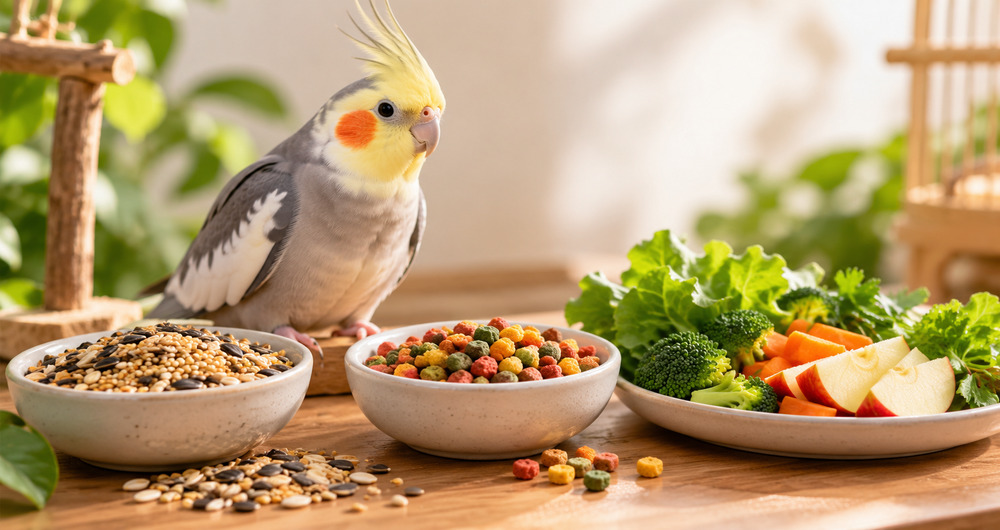
Pellets are specially formulated to provide a more consistent balance of nutrients in each serving. Depending on the formulation, they can contain grains, vegetables, proteins, vitamins, and minerals needed by companion birds.
One major advantage is that birds cannot easily pick out only their preferred ingredients. This makes pellets a useful nutritional foundation for many pet birds.
However, not every pellet is suitable for every species. A pellet designed for a large parrot may not be appropriate for a smaller bird. An avian or exotic-pet veterinarian can help you choose a suitable formulation based on your bird’s individual needs.
Adding Fresh Food to Your Bird’s Diet
Fresh foods can add variety, texture, fiber, and important nutrients to a bird’s meals. Vegetables such as carrots, bell peppers, leafy greens, and squash can be suitable options for many birds. Certain fruits can also be offered in smaller portions.
Fresh foods can provide more than nutrition. Different colors, textures, and shapes encourage natural exploration and can make meal times more interesting.
Always wash fresh produce thoroughly and cut it into appropriately sized pieces. Also remember that some foods that are healthy for humans can be unsafe for birds. Check with a veterinarian before introducing unfamiliar foods.
How to Create a Balanced Bird Diet
There is no universal diet that works for every pet bird. A budgie, cockatiel, lovebird, and larger parrot can have different nutritional requirements.
For many companion birds, a suitable diet may use pellets as the nutritional foundation, supplemented with fresh vegetables and appropriate fruits. Seeds can be provided in smaller quantities depending on the bird’s needs.
The goal is balance rather than simply offering lots of different foods. If a bird eats only seeds from a mixed bowl and ignores pellets and vegetables, the diet may still be nutritionally incomplete.
Clean drinking water should also be available every day. Food and water bowls should be washed regularly, particularly when fresh food is served.
How to Switch From Seeds to Pellets
Birds that have eaten seeds for a long time may not immediately accept pellets. Suddenly removing their familiar food can also cause unnecessary stress and may result in inadequate food intake.
Instead, introduce pellets gradually alongside the existing diet. Observe what your bird is actually eating and slowly adjust the proportions. Monitoring body weight during the transition can be helpful.
If your bird refuses food, becomes unusually inactive, or loses noticeable weight, contact a veterinarian promptly rather than continuing the transition without professional guidance.
For bird owners in Hyderabad, discussing nutrition with an exotic-pet or avian veterinarian can be especially useful when a bird has specific dietary requirements. Veterinary centers such as Seven Oaks Pet Hospital also provide exotic-pet care, which can be relevant when nutritional concerns require professional assessment.
What Should You Remember?
Choosing the right bird food isn’t about completely removing seeds or relying on one type of food. A balanced approach can provide better nutritional variety while reducing the risks associated with an unbalanced seed-heavy diet.
Pellets can provide a consistent nutritional base, fresh vegetables and suitable fruits add variety, and seeds can be used in moderation. Most importantly, your bird’s diet should be appropriate for its species, age, body condition, and health.
When you’re unsure about what or how much to feed, consulting an avian or exotic-pet veterinarian can help you create a diet suited to your bird.
Disclaimer:
This article is intended for educational purposes only and should not replace professional veterinary advice. If your pet is showing signs of illness or discomfort, please consult Seven Oaks or the nearest qualified veterinarian for an accurate diagnosis and appropriate treatment.
FAQ’S
Seeds can be included in a bird’s diet, but feeding only seeds is generally not recommended because they may not provide complete nutrition. The appropriate amount depends on the species and individual bird.
Pellets can provide more consistent nutrition than a seed-only diet. However, the right pellet should be selected according to the bird’s species, size, and health requirements.
Many birds can enjoy suitable vegetables such as carrots, bell peppers, leafy greens, and squash. Some fruits can also be offered in moderation. Always verify that a particular food is safe for your bird.
Introduce pellets gradually instead of suddenly removing seeds. Monitor your bird’s food intake and weight during the transition. If it refuses food, seek veterinary advice.
No. Different species have different nutritional requirements. Factors such as age, size, activity level, and health can also affect dietary needs.