Finding dog hair on your furniture, clothes, or car seats is a common part of being a pet parent. While shedding is completely natural, many owners notice it becomes much heavier during certain times of the year. Understanding dog shedding seasons can help you care for your pet’s coat, manage loose fur at home, and recognize when shedding may indicate a health concern.
Why Do Dogs Shed More During Certain Seasons?
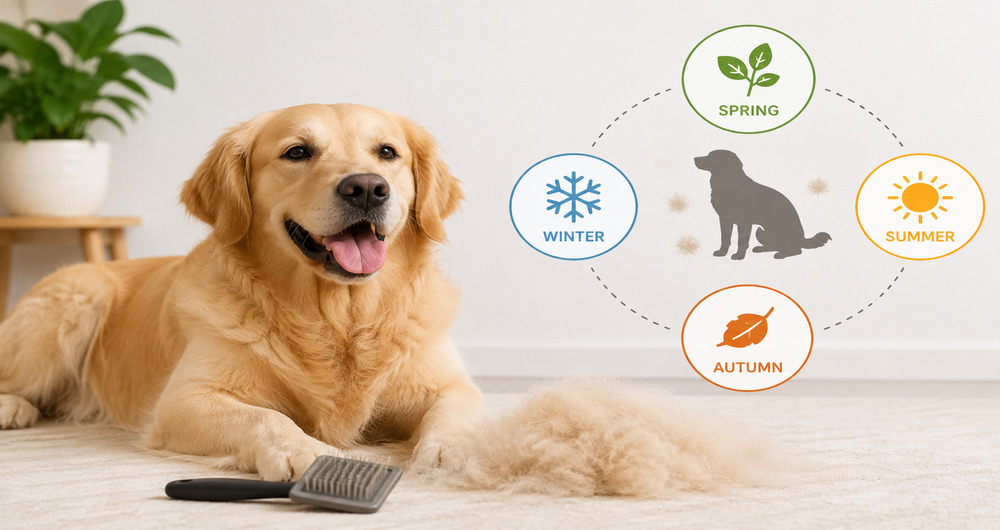
Shedding is your dog’s natural way of replacing old or damaged hair with healthy new growth. Many dogs experience seasonal shedding, especially those with double coats.
In spring, dogs shed their thick winter coat to stay comfortable in warmer weather. During autumn, they lose their lighter summer coat as a thicker winter coat begins to grow. This natural cycle is influenced by changes in daylight and temperature.
Dogs that spend most of their time indoors may shed more evenly throughout the year because artificial lighting and air conditioning can affect their natural shedding patterns.
Which Dog Breeds Shed the Most?
Some breeds naturally shed more than others due to their coat type and genetics.
Labrador Retriever
Labradors have dense double coats and shed throughout the year, with heavier shedding during spring and autumn. Regular brushing helps reduce loose hair around the house.
Golden Retriever
Golden Retrievers are known for their beautiful coats, but they also require consistent grooming. Seasonal coat changes can lead to increased shedding.
German Shepherd
Often nicknamed “German Shedders,” these dogs lose hair year-round and experience noticeable seasonal shedding.
Siberian Husky
Siberian Huskies have dense double coats that shed heavily during seasonal coat changes, often releasing a large amount of their undercoat within a few we
Alaskan Malamute
Like Huskies, Malamutes have heavy double coats that shed significantly during seasonal transitions.
Pembroke Welsh Corgi
Despite their small size, Corgis are heavy shedders and benefit from frequent brushing to manage loose fur.
Akita
Akitas shed moderately throughout the year but experience two heavy shedding seasons annually.
Which Dogs Shed Less?
While no dog is completely shed-free, some breeds lose much less hair. Poodles, Bichon Frises, Maltese, Schnauzers, and Portuguese Water Dogs are considered low-shedding breeds. They still require regular grooming, but loose hair is often trapped within their curly or textured coats instead of falling around the home.
Tips to Manage Seasonal Shedding
Although shedding cannot be completely prevented, a good grooming routine can help keep it under control.
- Brush your dog several times a week using the right brush for their coat type.
- Bathe your dog with veterinarian-recommended shampoos to remove loose hair.
- Feed a balanced diet rich in high-quality protein and Omega-3 fatty acids for healthy skin and coat.
- Ensure your dog stays well hydrated.
- Schedule professional grooming during peak shedding seasons, especially for double-coated breeds.
Regular grooming not only reduces shedding but also helps you identify skin problems early.
When Should You Be Concerned?
Seasonal shedding is normal, but excessive or sudden hair loss may signal an underlying health issue.
Contact your veterinarian if your dog has:
- Bald patches
- Constant scratching or licking
- Red, flaky, or irritated skin
- Hair loss with an unpleasant odor
- Shedding that seems unusually heavy or continues beyond the normal season
These symptoms may be caused by allergies, skin infections, parasites, hormonal disorders, or nutritional deficiencies. Early diagnosis can prevent discomfort and support faster recovery.
Keep Your Dog’s Coat Healthy with Regular Veterinary Care
A healthy coat is often a reflection of your dog’s overall health. Routine veterinary check-ups help identify skin and coat issues before they become serious. Your veterinarian can recommend the right nutrition, parasite prevention, grooming routine, or treatment based on your dog’s breed and individual needs.
Final Thoughts
Seasonal shedding is a natural part of your dog’s life, especially for breeds like Labrador Retrievers, Golden Retrievers, German Shepherds, Huskies, Corgis, and Akitas. While regular brushing, proper nutrition, and grooming can help manage loose fur, sudden or excessive shedding should never be ignored.
If you’re concerned about your dog’s shedding or notice changes in their skin or coat, the veterinary team at Seven Oaks Pet Hospital is here to help. With the right care and guidance, your furry companion can enjoy a healthy coat and stay comfortable in every season.
Disclaimer:
This article is intended for educational purposes only and should not replace professional veterinary advice. If your pet is showing signs of illness or discomfort, please consult Seven Oaks or the nearest qualified veterinarian for an accurate diagnosis and appropriate treatment.